
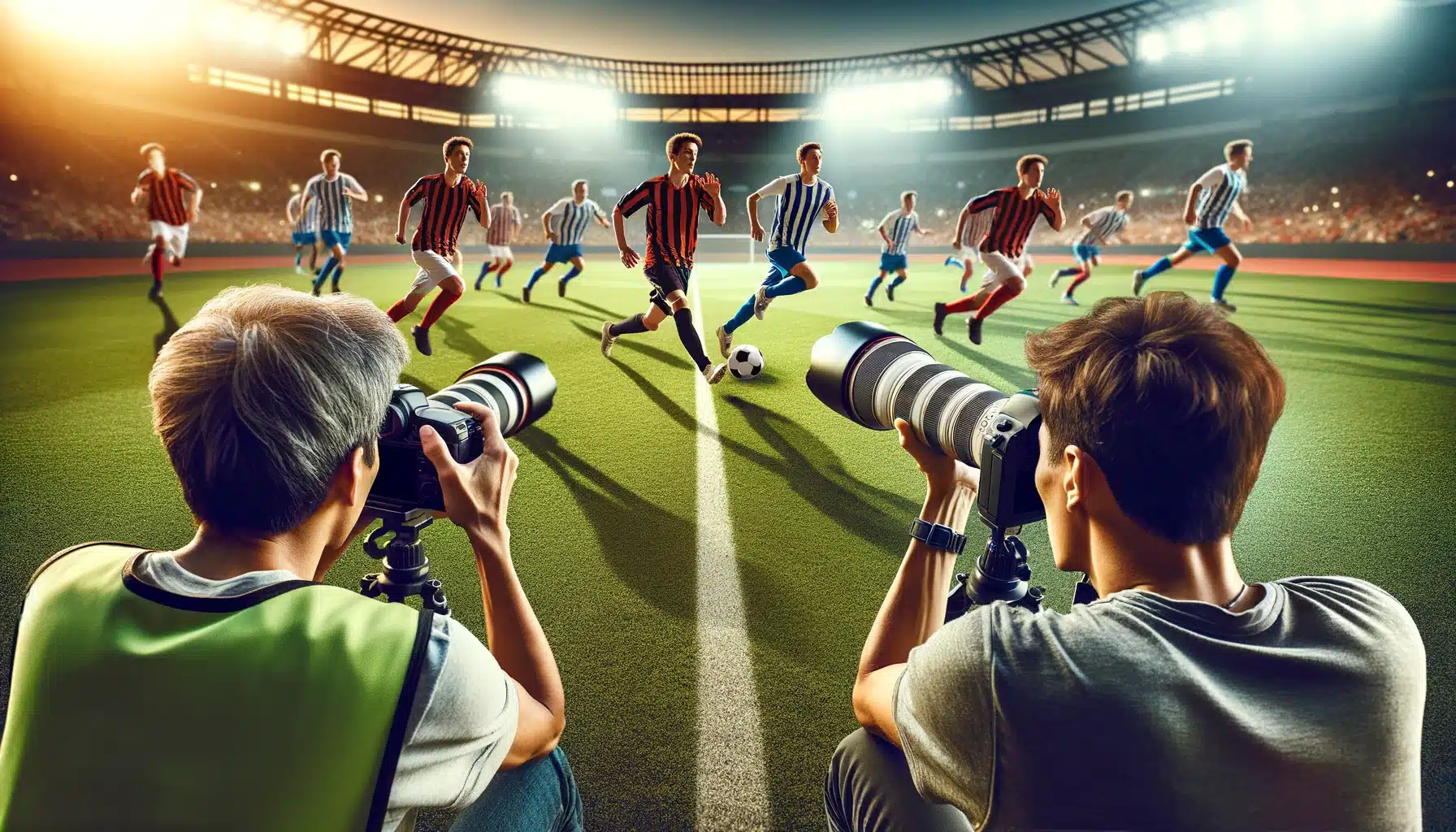
Sports photography is a theater of velocity. It captures the suspended second before a goal. The airborne fraction of time when a sprinter breaks forward. The explosive instant a basketball leaves an athlete’s fingertips. Action photography is unpredictable, kinetic, and exhilarating. It is also technically demanding. Motion blur, inconsistent lighting, digital noise, and compression artifacts can compromise even the most dramatic frame.
Fortunately, modern digital tools make it possible to online enhance image quality with precision and efficiency. Through intelligent algorithms, artificial intelligence, and advanced image reconstruction, photographers can refine their action shots without expensive desktop software. The result is sharper, clearer, and more impactful imagery that preserves the intensity of the moment.
The Challenges of Capturing Motion
Sports environments are rarely controlled. Stadium lights fluctuate. Weather shifts. Athletes move with ferocious speed. Cameras must respond instantly, often at high ISO settings and rapid shutter speeds.
This combination can introduce grain, underexposure, and diminished clarity. Fast shutter speeds freeze motion but may darken the image. High ISO brightens scenes but introduces noise. Rapid bursts of frames can reduce sharpness in critical moments.
These technical compromises are common. They are not failures. They are opportunities for refinement.
With smart platforms that allow photographers to online enhance image quality, imperfections can be mitigated without diminishing authenticity.
Understanding Image Degradation in Action Shots
Before enhancing sports images, it is important to identify the sources of degradation:
- Motion blur from subject movement
- Camera shake during handheld shooting
- High ISO noise
- Compression from rapid file transfers
- Cropping that reduces resolution
- Uneven stadium lighting
Each factor influences clarity differently. Motion blur softens edges. Noise introduces granular interference. Cropping magnifies pixel structure, often revealing artifacts.
Modern enhancement systems address these issues individually through computational photography techniques. They analyze pixel patterns, reconstruct edges, and recalibrate tonal range with contextual awareness.
AI Upscaling for Cropped Frames
Sports photographers frequently crop images to emphasize a decisive play. A tight frame on a striker’s expression can transform a routine shot into a narrative masterpiece. However, cropping reduces resolution.
AI-powered upscaling compensates for this loss by synthesizing detail. Instead of merely enlarging pixels, neural networks predict missing information based on learned visual models. Textures regain dimensionality. Lines appear defined. Facial features become crisp.
Through platforms designed to online enhance image quality, cropped action shots can achieve renewed clarity suitable for publication or large-format printing.
Short crop. Big impact.
Reducing Noise in High-ISO Photography
Low-light arenas and night matches often demand elevated ISO settings. The resulting luminance noise can obscure detail and create chromatic speckling across darker areas.
Advanced denoising algorithms distinguish between noise and meaningful texture. They smooth irregular pixel clusters while preserving structural integrity. The balance is delicate. Over-processing leads to plasticity. Under-processing leaves distracting grain.
Smart tools calibrate this equilibrium automatically. They examine adjacent pixels, evaluate tonal gradients, and selectively reduce interference. When photographers online enhance image quality, they can maintain an atmosphere without sacrificing sharpness.
Sharpening Without Artificial Artifacts
Sharpening enhances micro-contrast along edges. In sports photography, this can accentuate muscle definition, ball trajectory, or equipment detail. However, excessive sharpening produces halos and unnatural contours.
Contemporary enhancement platforms apply adaptive sharpening. They identify edge boundaries through gradient mapping and reinforce clarity selectively. Background elements remain soft. Subjects become pronounced.
This nuanced approach ensures that when you enhance image quality, the final image appears natural rather than over-processed.
Color Correction Under Stadium Lighting
Artificial lighting presents chromatic inconsistencies. Sodium-vapor lamps may cast a yellow tint. LED arrays can introduce cool, blue undertones. Shadows may absorb color depth unevenly.
Automated color correction analyzes white balance, adjusts tonal curves, and harmonizes hues across the frame. Skin tones regain authenticity. Team jerseys appear vibrant. Turf greens look balanced rather than fluorescent.
Even subtle chromatic refinement enhances the psychological resonance of an image. A well-balanced palette strengthens visual coherence and emotional engagement.
Motion Clarity and De-blurring Techniques
Some action shots contain slight motion blur, especially when tracking fast-moving athletes. While extreme blur cannot always be reversed, modern de-blurring algorithms reconstruct edge definition by modeling motion trajectories.
These systems assess directional pixel displacement and compensate for subtle blur patterns. The result is improved clarity in moderately affected frames.
For sports photographers working under time constraints, the ability to online enhance image quality quickly can mean meeting publication deadlines without compromising impact.
Workflow Efficiency for Sports Photographers
Speed matters. Sports media operates under immediacy. Images must be edited and distributed within minutes of a pivotal play.
Online enhancement tools streamline workflow:
- Upload image files directly from memory cards or cloud storage.
- Apply automated corrections in seconds.
- Download optimized versions ready for publication.
No installation. No complex interface navigation. Efficiency becomes an asset.
This digital agility allows professionals and enthusiasts alike to online enhance image quality while preserving creative momentum.
Enhancing Dynamic Range
Sports venues often feature high-contrast lighting conditions. Bright highlights from floodlights collide with deep shadows under helmets or uniforms.
Dynamic range enhancement adjusts exposure across tonal zones. Highlights are softened. Shadows are lifted. Midtones gain clarity.
This creates a more balanced composition without flattening contrast. Detail emerges in previously obscured areas, strengthening the narrative dimension of the image.
Optimizing for Social Media and Web Platforms
Action photography thrives online. Social media platforms compress images automatically, potentially reducing clarity. Preparing files with optimal resolution and sharpening can counteract compression effects.
When photographers online enhance image quality, they can tailor output dimensions and clarity specifically for web environments. Crisp visuals stand out in crowded feeds. Engagement increases. Visual authority strengthens.
Preserving Authenticity While Enhancing Impact
Enhancement should refine reality, not fabricate it. Ethical sports photography respects the integrity of the moment. Adjustments should clarify rather than alter events.
Responsible image enhancement includes:
- Maintaining accurate color representation
- Avoiding manipulation of game elements
- Preserving chronological authenticity
Smart tools support these principles by focusing on technical improvement rather than compositional alteration.
Practical Tips for Better Online Enhancement
To achieve optimal results when working with action shots:
Use the highest resolution file available.
Avoid excessive compression before uploading.
Apply moderate sharpening and noise reduction.
Review enhanced images at 100% zoom for artifact detection.
Compare original and enhanced versions to maintain realism.
These strategies maximize the effectiveness of platforms that online enhance image quality.
The Psychological Power of Crisp Action Shots
Clarity intensifies drama. A sharply defined image captures the strain in an athlete’s expression, the suspended dust beneath cleats, the ripple of fabric in mid-stride. These details evoke immersion.
Viewers respond instinctively to precision. Clear imagery conveys professionalism and credibility. In competitive media environments, that distinction matters.
Short bursts of clarity can define an entire visual narrative.
The Future of Online Sports Image Enhancement
Technological evolution continues. Real-time AI enhancement during live uploads is emerging. Adaptive algorithms may soon tailor optimization based on sport type distinguishing between the kinetic chaos of football and the fluid motion of swimming.
Edge reconstruction will grow more sophisticated. Motion modeling is more predictive. Texture synthesis is more refined.
As these capabilities expand, the ability to online enhance image quality will become increasingly seamless and intuitive.
Sports photography captures intensity, resilience, and fleeting triumph. Yet technical constraints often accompany fast-paced environments. Noise, blur, and lighting inconsistencies are part of the craft.
With modern intelligent tools, photographers can online enhance image quality efficiently and ethically. Through AI upscaling, adaptive sharpening, noise reduction, color harmonization, and dynamic range optimization, action shots regain their brilliance.
A fraction of a second becomes timeless.
A decisive moment becomes unforgettable.
Precision elevates emotion. And in sports photography, that clarity transforms movement into memory.


More Stories
10 Unexpected Superfoods That Will Transform Your Health Overnight
The Hidden Power of Everyday Spices for Optimal Health
5 Unexpected Health Hacks to Transform Your Daily Routine